Why Movement Matters in a Private Nursery School Classroom
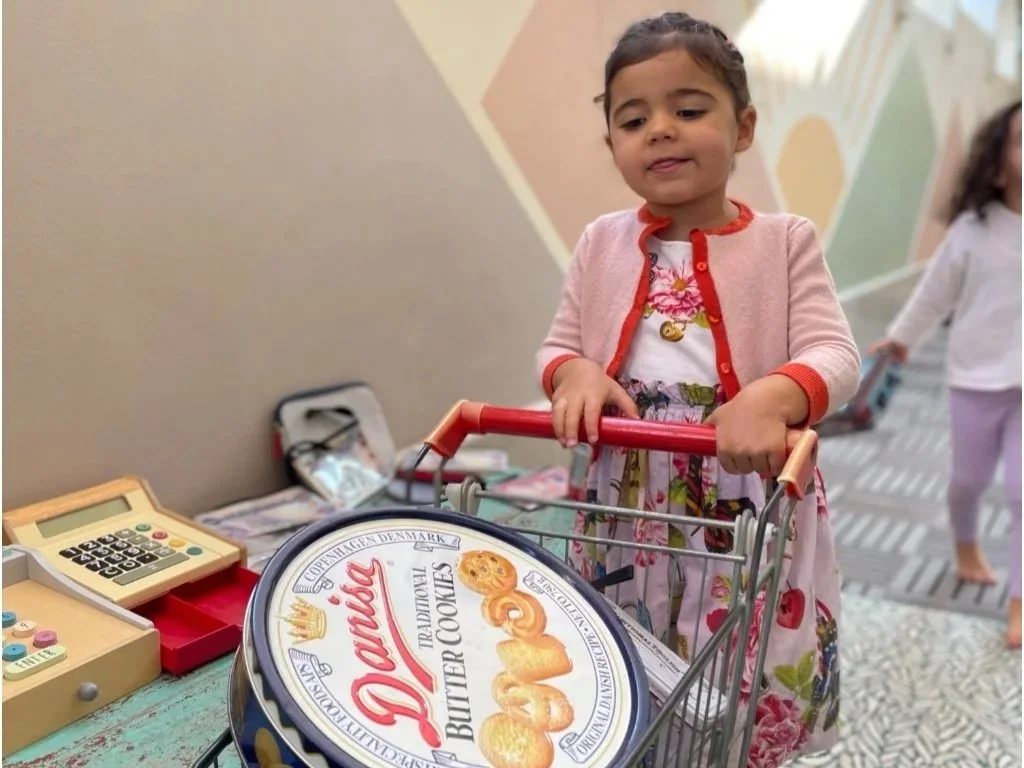
Movement is the key to learning!
Movement Is How Children Make Sense of the World
Young children do not enter a classroom with the intention of causing disruption. Their first instinct is curiosity and discovery! They move to understand space, they carry objects to see what happens elsewhere, and they change position because their bodies are still learning how to regulate themselves.
When a child takes a book and walks across the room to sit against a wall or lie on their tummy on the carpet, they are not being unfocused, they are responding to what their body needs in that moment. Freedom of movement supports self regulation, rather than working against it.
When Resources Can Travel, Learning Deepens
In many classrooms, materials are fixed to specific areas; books stay in the book corner, blocks stay in the construction area, and the pretend food has to stay in the play kitchen. Children, however, do not think in zones like we do.
If a child brings blocks into the play kitchen to use as biscuits, that is imaginative thinking in action. How often do we tell each other to ‘think outside the box'…well, this is the foundation for that way of thinking! When resources are restricted to one place, frustration often follow. It’s not because children are doing something wrong, but because their thinking is being limited.
In a well designed private nursery school classroom:
Children are trusted to move resources with intention and purpose, rather than being stopped automatically
Educators observe children’s play before stepping in, allowing learning to unfold naturally
Materials are carefully chosen because they invite flexible and open ended use
If you do not want an object to travel within a space, it usually means it does not belong there in the first place.
Fewer Barriers, Less Frustration
Many behaviour challenges stem from repeated restrictions placed on children throughout the day. “No, not there”, “No, not like that”, “No, you cant touch that” are phrases that children hear far too often in overly controlled environments.
When classrooms are too restricted, they will ultimately feel blocked. Their bodies want to move yet the space does not allow it, leading to an increase in negative behaviours like snatching, outward frustration, and difficulty regulating emotions. It’s not because children are being difficult, but because they are responding to an environment that limits natural exploration.
A movement friendly environment reduces the need for constant correction, creating calmer interactions, smoother transitions and a settled classroom dynamic.
Structure Still Exists
Movement does not mean that anything goes. There is a time and place for everything, painting belongs where mess is welcome, construction belongs where it can grow and evolve, and quieter moments exist alongside more active ones.
The difference is that the environment provides the boundaries, rather than adults repeatedly stepping in to manage behaviour. When a space is designed thoughtfully, children instinctively understand how to use it, and far less verbal correction is needed.
This becomes especially important when children are first introduced to a classroom. They need time to understand the space with their bodies before they can fully settle into it.
At Kid’s Island, children are welcomed into spaces and given the freedom to explore without immediate adult direction. Educators observe how children move, where they naturally gravitate and how materials provide purpose in a space before they offer guidance. This period of exploration allows children to feel ownership of the space, which often leads to calmer, more focused engagement.
Why This Matters in a Private Nursery School
Parents often ask how educators can keep a group of young children so calm while they’re together in nursery, yet calm does not come from shushes for silence. It comes from children feeling safe and comfortable in their bodies! In a quality private nursery school, movement is not something to manage or control, it is something to intentionally design for.
When children are trusted to move, they learn to regulate themselves. When they are trusted to explore, they develop responsibility. And when environments say yes more often than no, classrooms naturally become calmer.
Some of the calmest moments we see in our nursery is when children are spread across a space; each deeply engaged, choosing where their body feels most settled and getting stuck into play. When children are trusted to listen to their bodies, stillness often follows movement, not the other way around.
So What Does This Mean for Children?
Movement is not the opposite of learning, it is the foundation of it. A thoughtfully designed nursery school classroom allows children to move, explore, and discover without unnecessary restriction, supporting emotional regulation, reducing frustration and creating genuinely calm environments where children can thrive
Get in touch to book a tour of our nursery school, or book a stay-and-play nursery school session to see how your child experiences the nursery school. Or get in touch with Kid’s Island Nursery School, Dubai for any other questions you might have.