Mixing Ages: What to Expect When Siblings Attend Camp Together
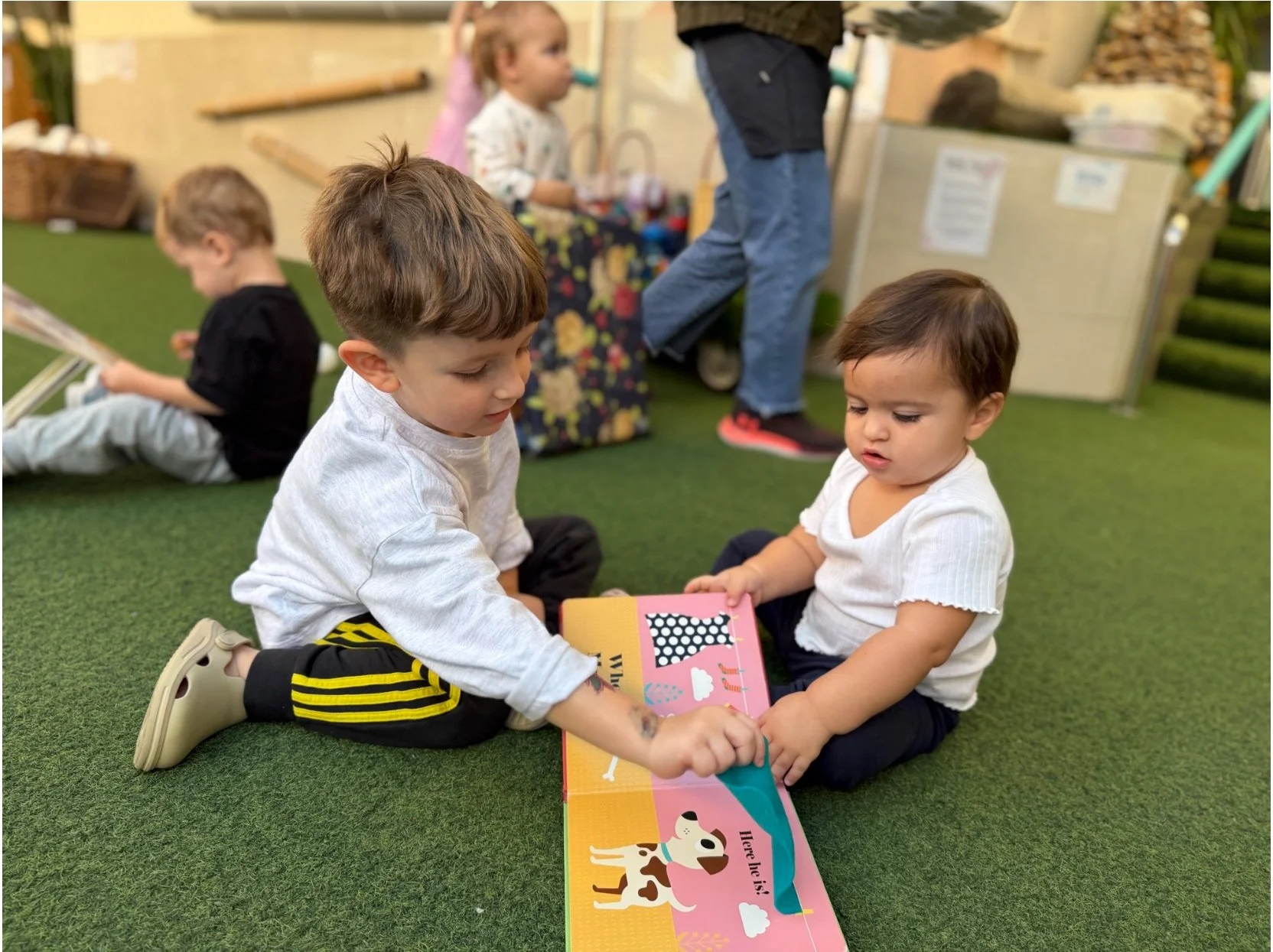
Mixed age groups are wonderful learning opportunities - for both the older child and the younger!
If you're considering nursery holiday club for your children, you might notice something different from the regular nursery day: children of varying ages learning and playing together. Before you worry that this will be chaotic or developmentally incompatible for your own child, let's explore why mixed age groups during holiday clubs can actually be incredibly beneficial!
How Holiday Clubs Work Differently
Sometimes camps and holiday clubs function a little differently than everyday nursery does. Because there are fewer classes running during school breaks and staff members take turns going on their own summer holidays, the dynamics naturally shift.
You'll find that age gaps between children in the classroom are much more common during nursery holiday club sessions than during term time. A two year old might be playing alongside a four year old. Siblings separated by age during regular nursery hours might find themselves in the same space during holiday club.
This isn't a logistical compromise or a sign of lower quality care. It's simply how holiday programming works and it comes with its own unique benefits that many early years experts actively encourage.
The Beautiful Benefits of Mixed Ages
Is mixing ages at nursery holiday club a problem? Absolutely not. In fact, we actively look forward to it!
We encourage our older children to be role models to their sibling and the same principles apply outside of family relationships. When a three year old helps a younger child reach the paint brushes or demonstrates how to pour water without spilling, they're developing leadership skills, empathy, and patience.
The dynamics work both ways. The younger ones allow the older children to feel more comfortable leaning into imaginative play without worrying about seeming "babyish." A four year old who might feel pressure to act grown up around same age peers often relaxes into creative play when younger children are present.
Meanwhile, the older children naturally encourage independence and communication from the little ones. A two year old watching an older child confidently ask for help or negotiate turn taking learns through observation in ways that adult modelling simply can't replicate.
The dynamics are different from single age classrooms, but there is still plenty of fun and learning happening. Often, the learning runs deeper because children are teaching and learning from each other.
The Waldorf Philosophy of Mixed Age Learning
This approach isn't new or experimental. The Waldorf (also called Steiner) educational system has long embraced mixed age groups, sometimes with age differences spanning several years within the same classroom.
The theory centres on children learning from each other and encouraging a sense of communal teaching practices rather than all knowledge flowing from adult to child. In this model, the classroom becomes a small community where everyone has something to offer and something to learn.
Older children solidify their own understanding by explaining concepts to younger ones. Younger children are naturally inspired to attempt new skills when they see slightly older peers succeeding. The close knit connections that form across ages often feel more like family dynamics than typical peer relationships.
At a nursery holiday club, we see these principles in action naturally. Without the pressure of formal curriculum delivery, children have space to interact, learn from one another and build relationships across age boundaries.
Structure Within the Mix
It's also important to note that mixed age interaction doesn't mean chaos or lack of structure. Most nursery holiday club programs maintain two or three different age groupings, so while children have periods of interaction and mixing with different age groups, there is still time where they are with their similar age peers.
This balanced approach means younger children aren't overwhelmed by constantly trying to keep up with older, more capable children. Older children still have opportunities for age appropriate challenges and conversations. But the bridges between groups remain open, allowing for natural interaction throughout the day.
Activities can be differentiated within mixed groups. During art projects, younger children might focus on sensory exploration while older children work on more complex creations, all side by side. During outdoor play, different ages naturally gravitate toward challenges that suit their abilities while still playing together.
A Wonderful Bonding Opportunity
Whatever needs to work can always work when approached with intention and flexibility. Mixed age groups at a nursery holiday club can be looked at as a wonderful bonding opportunity for siblings who don't usually spend their nursery day together.
For only children, it's a chance to develop those all important skills that typically only come from having an older or younger sibling: patience, mentoring, looking up to role models, learning to adapt communication for different ages, and understanding that not everyone can do what you can do (yet!).
Rather than seeing mixed ages as a compromise, consider it an enriching aspect of the holiday club experience. Your children aren't just being supervised together; they're learning invaluable social and emotional skills that will serve them throughout their lives.
If you are considering nursery school for your little one, get in touch to explore our nursery environment by booking a tour of our nursery school, or booking a stay-and-play nursery school session to see how your child experiences the nursery school.