Play Based Learning: The Heart of Quality Early Years Care
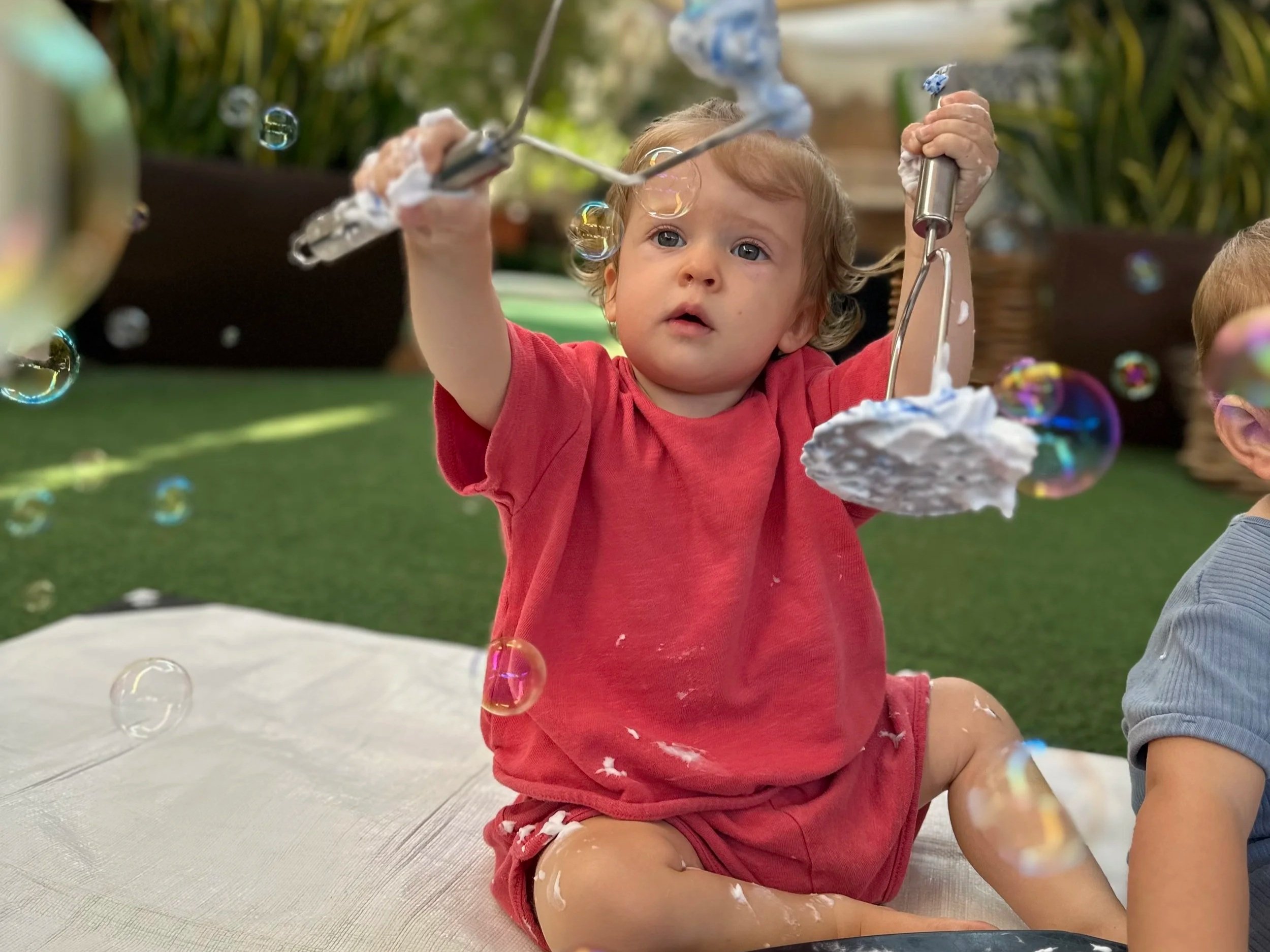
Let’s explore why early years play-based learning is the expectation AND the rule!
If you've ever watched a toddler spend twenty minutes transferring water from one cup to another, you've witnessed the magic of play-based learning in full swing. What looks like simple, repetitive motions is actually a child's brain firing on all cylinders; exploring physics, developing fine motor skills, and problem-solving with genuine focus.
What is Play-Based Learning?
Play-based learning is exactly what it sounds like: children learning through play rather than formal instruction. It is the difference between child-led play that is guided by adults, versus adult-led activities that may or may not interest the children at all. It's the idea that a child pouring sand, building with blocks, or pretending to run a restaurant isn't just "playing", they're actively using their lived experiences to make sense of the world around them.
In a quality early years care setting, educators create rich learning environments where play becomes the vehicle for knowledge and understanding. Instead of Twinkle worksheets and laminated flash-cards, children instead engage with materials, explore ideas, and make discoveries on their own terms.
Why Play is Non-Negotiable in Early Education
Young children aren't miniature adults who simply need scaled-down academic lessons. Their brains are wired to learn through hands-on exploration and sensory experiences. Play-based learning honours this developmental reality and ensures that they can touch, feel and experience new things in order to learn from them.
When children have the freedom to follow their curiosity, they develop intrinsic motivation, the internal drive to learn that will serve them throughout life. They're not learning because an adult told them to, but because they genuinely want to understand how something works. Genuine, enthusiastic interest in a topic is how we get the greatest minds of our lifetime; think of Einstein, Steve Jobs and Leonardo DiVinci. Their interests guided their magnificent lives.
How Play Shapes Developing Minds
Play-based learning creates neural pathways that support everything from language development to mathematical thinking. When a child negotiates roles in pretend play, they're building social skills and emotional intelligence. When they stack blocks until the tower falls, they're learning about gravity, balance, and special awareness.
The beauty of play is that it naturally differentiates itself. Each child engages at their own level of ability and interest, ensuring it’s appropriate for their developmental age and stage.
Meeting Children Where They Are
Developmental milestones exist on a spectrum, not a rigid timeline. A three-year-old who isn't yet speaking in full sentences can still engage in rich play experiences that build language skills. A four-year-old who struggles with fine motor control can strengthen those muscles through painting and playdough, not forced pencil grip exercises.
Quality early years care recognizes that pushing children beyond their developmental readiness doesn't accelerate learning, it can do the opposite: create frustration and anxiety, driving children to avoid what they need to develop.
Bringing Play-Based Learning Home
You don't need fancy toys or expensive materials to support play-based learning at home. Simple, open-ended items work best:
Cardboard boxes, old biscuit tins and empty cereal boxes.
Wooden spoons, metal sieves, measuring cups.
Fabric scraps, old bedsheets and toilet paper tubes.
Natural materials from the garden, e.g. leaves, sticks, mud, sand, soil.
Follow your child's lead. If they're fascinated by pouring water, set up opportunities for water play. If they're obsessed with dinosaurs, incorporate dinosaurs into counting games, storytelling, and art projects. Sometimes play on its own is enough!
The Foundation for Lifelong Learning
Play-based learning creates children who are confident, curious, and capable. They've learned to think critically, solve problems creatively, and work collaboratively with others. These are the skills that matter far more than early reading or memorised math facts when they move on to big school.
When we trust children to learn through play, we're not lowering expectations. We're instead saying that childhood matters, that development can't be rushed, and that the foundation we build in these early years will support everything that comes after!
Ready to discover how flexible nursery attendance could transform your return to work? Book a nursery tour today and let's discuss an attendance pattern that works perfectly for your family's unique needs.