What Kind of Pre-School Is Best for My Child?
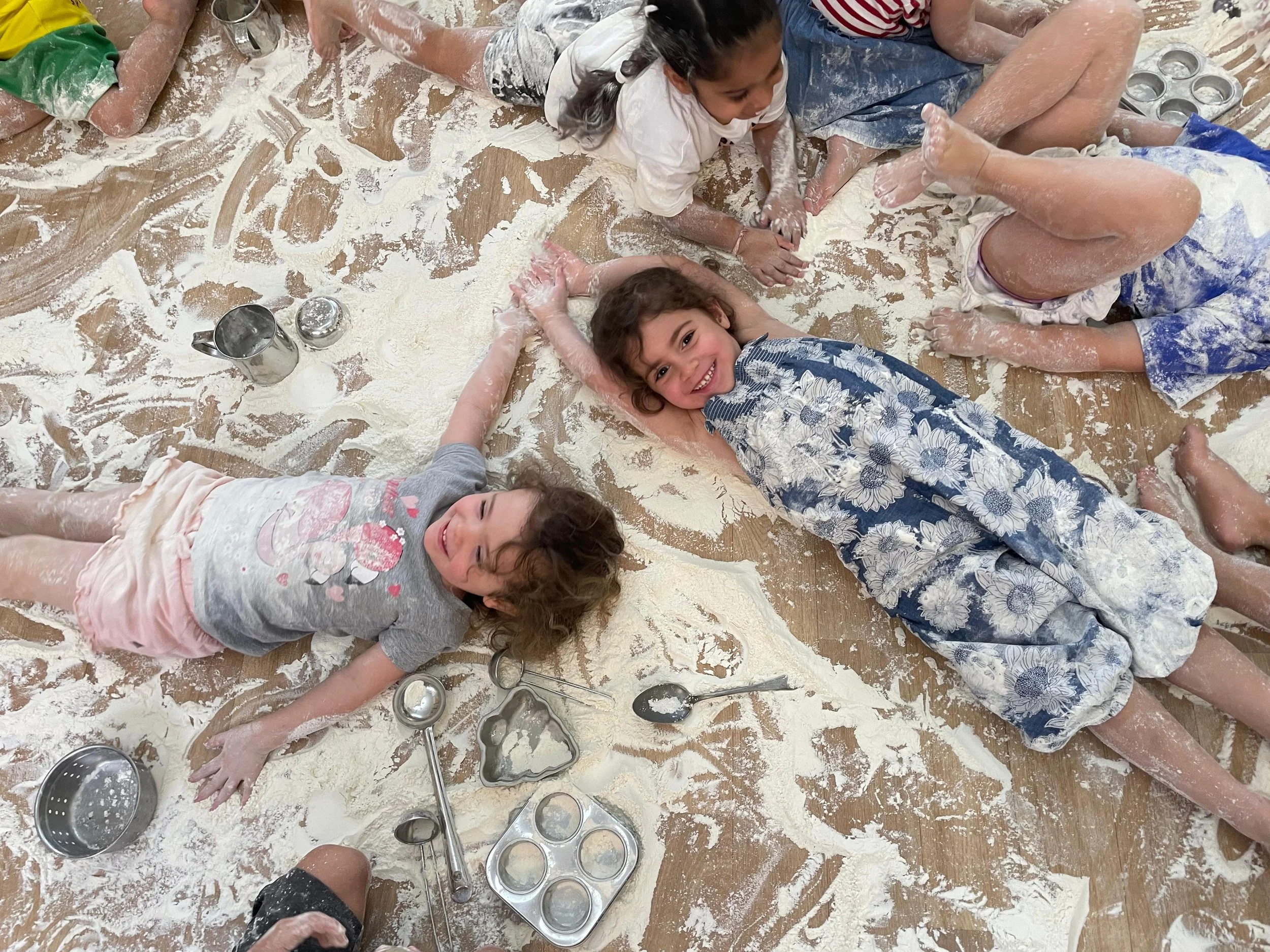
Children need freedom to explore and learn in the way that suits them best!
It’s a very good question, and we’re here to help you narrow it down.
Understanding your child’s educational needs when choosing a nursery school.
When parents are beginning to consider nursery, pre-school, or kindergarten options in the UAE, it can become an overwhelming task that evolves into a blur of tours, assessment criteria, and an abundance of choice. Not only does “nursery school” go by two other names, “pre-school” and “kindergarten”, but nursery schools aren’t always independent and specialized (like us!), and are also commonly part of primary schools too.
Don’t get us wrong, it’s a really good problem to have! Being able to have agency in your child’s nursery school choices is a gift, and in order to make the right decision for your family, you need to be as informed as possible. Should your little one be building mud pies in a Forest School, exploring light and colour in a Reggio classroom, or arranging beads with Montessori focus?
Let’s explore this together and find out which nursery school learning approach is the right fit for your child!
Montessori Nurseries
Core Principles:
• The Montessori approach was founded by Dr. Maria Montessori and has a heavy focus on independence, hands-on learning, and self-paced exploration of their learning.
• The classroom environments are typically very calm and structured, where child-led learning is prioritised based on their interests within set parameters.
Benefits:
• The research behind Montessori suggests that this kind of environment encourages children to have better focus, be more independent and have a sense of responsibility from a young age.
• Similar to the Waldorf/Steiner approach, mixed-age classrooms are also a core aspect to encourage children to learn from one another and facilitate community.
Within the UAE:
• Montessori nurseries in the UAE often blend the core principles of Montessori with the British EYFS curriculum, giving families a structured, yet independent learning environment.
Waldorf/Steiner Nurseries
Core Principles:
• The Steiner approach is based on Rudolf Steiner’s philosophy of educating the ‘whole child’, that means their head, heart, and hands.
• There is a large emphasis put on the use of imagination, storytelling, musical rhythm and play during children’s education.
• The atmosphere of Steiner settings tends to be very calm and homely, with the use of natural materials and little to no technology, especially in early years.
Benefits:
• There is a strong encouragement toward emotional and social learning, aiming to create well-rounded children with a strong belief system.
• Strong foundations for later academic learning are built through a more creative and rhythmic learning approach early on in children’s school careers.
Within the UAE:
• Waldorf-inspired nurseries in the UAE are a draw for families who prefer their children to have a more holistic and slower-paced approach to early childhood, with less of a focus on academics and more on the child’s wellbeing and happiness.
Forest School Nurseries
Core Principles:
• The Forest School approach originated in Scandinavia, where children’s learning is rooted in nature-based learning in outdoor environments.
• Children’s days at Forest School are spent largely outdoors, learning through physical skills and play like climbing, digging, building, observation and exploration.
• There is a strong emphasis put on being a hands-on learner and experimenting using the resources that nature provides.
Benefits:
• Learning outdoors through all four seasons (while we barely get two!) encourages children to be resilient, problem-solvers, team-players and to have great awareness of their bodies and minds.
• Children’s ability to explore their own interests and have freedom in their educational environments promotes the wellbeing of children and a strong sense of imagination and adventure. Not to mention, respect for nature!
Within the UAE:
• While the UAE doesn’t exactly have vast, evergreen forests, educators have begun to adapt this concept through garden spaces, beaches and outdoor learning areas. Innovation in this area of learning continues to grow within the Emirates every year!
Whether your child prefers to walk on the wild side or is more of a sit-down academic, there is always an option out there for them. It takes some scraping back from the surface, and some digging does have to be done, but it is out there. The right pre-school for your child will take that spark inside your child and make it shine! Just follow your child’s lead, don’t squish them into a box that they don’t fit in!
If you are considering a nursery school for your toddler, book a stay-and-play nursery school session to see how your child experiences the nursery school, or book a tour of our nursery school and come speak to our teachers. Get in touch with Kid’s Island Nursery School, Dubai for any other questions you might have.
F.A.Q:
-
You want to be asking yourself questions, first and foremost, that align with what is most important to your family.
It is always a good idea to tour different nurseries and schools and see what is out there, cast your net wide. In addition to that, we always recommend writing down questions beforehand to ensure the establishment provides that information for you.
Examples of questions may be:
1. What are your child/teacher ratios?
2. What is your illness prevention policy?
3. What is the daily routine like?
4. Do you provide sleep/toilet training support?
These are just some examples, but you can be as specific as you like. Be curious, ask questions! -
What a great question!
The answer is…whatever works for your child as an individual! If you know that your child does best in smaller groups where they have more freedom to pursue their own interests.
There is no ‘regular’ nursery school so to speak, most nursery schools will base their approach on a curriculum. Other nurseries will have more of a specific focus, like a Montessori nursery. -
Everything is subjective!
If you have a very close bond with your child and there is some anxiety around seperation, we usually suggest that children like this start earlier rather than later.
When children 1-2 years old start nursery, they have less awareness of the world around them and object permanence also plays a role! Out of sight, out of mind, so to speak.
When a child turns 2-4 years old, they are more aware and have been with their caregivers exclusively for much longer, making transition into nursery a slightly longer process.